Saturday, February 22, 2014

বাবুর অসুখ/ Babur Oshukh/ The Master's illness by Sarat Kumar Mukhopadhyay


Put the three legged table by him
Spread a cloth as pure as your caring heart.
A glass for his pills, a foil pack of capsules
Clock, a bottle of water
That is all; now
You must all wait at a distance till the doctor arrives.
The master is sick.

This is a very dangerous disease, but still
If you can, let his wife know.
People say, wives don’t catch things
A couple of friends too, the kind
That can look on, expressionless
At the person on the bed by the white covered table
His eyes red with pain,
As he gets help with this and that.
The kind that sit down for five minutes and make him feel happy
Then leave.

Whatever you do, try to do it quickly

You will not get this chance as easily, once he gets better.

Sarat Kumar Mukhopadhyay

Monday, February 17, 2014

Shambo by Kalkut/Samaresh Basu: An extract


Let me tell you about the time I went with this friend of mine whom I call Dada, to Shimultala in the Santhal Parganas. There were many others with us. It does not really matter why we were there. There was this feel of being on a picnic. After lunch and a rest it was decided that we would go to the markets at Tiluabazar three miles away to get some things. Actually that was like going on a trip on its own merit.

There was a Santhal girl at the markets with a cage full of pigeons. These were newly fledged and plump. The pigeons were anxious and fearful and the people around them made them flap their wings inside the cage. Suddenly recalling that we had not had pigeon meat in a long time, I said to Dada, ‘Let us buy all the pigeons, we will eat them.’

Dada looked at me through his thick lenses, his brown eyes bright as he asked, ‘You want to eat pigeon meat?’ He looked at the pigeons in the cage and then at the girl selling them. He said, ‘I suppose you should buy them then.’

Buy them I did. When I heard the price, I felt rather like the ‘Damn cheap’ babu of the story. Dada reached for the cage, saying, ‘Let me see them?’

I handed the cage to him. As he opened the door to the cage, he said, ‘You wanted to eat pigeon meat? Well, eat!’ And he caught the birds one by one and threw them into the sky.

As I tried to stop him,  I saw how the pigeons flew in an explosion of colours into the fading egg yolk sunshine of that autumn day in the Santhal Parganas. Dada was looking at me. There was not the slightest sign of regret in his face; his eyes twinkling instead as he asked, ‘Do you want to buy more pigeons? Come and let us see if there are any more on sale in the market.’
The Santhal girl who had sold the pigeons, the people around us and even our own friends had started laughing by now. I came on a trip. The pigeons went on one of their own to the skies. But by then, the laughter had entered my soul.
‘যে যায় এমন ভ্রমণে
কৃষ্ণ থাকে তার সনে।’


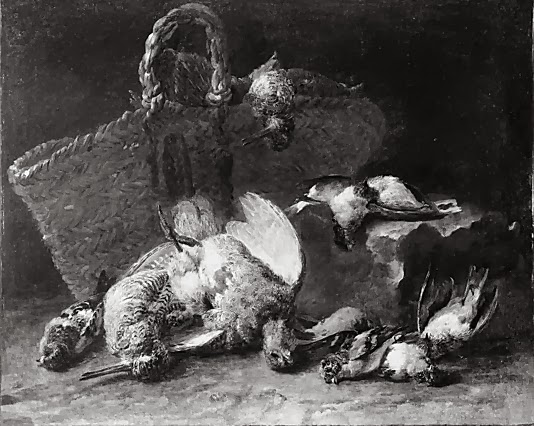
painting by Jan Fyt(1611-1661)
http://www.metmuseum.org/collections/search-the-collections/436424


Wednesday, February 5, 2014

অলীক জন্মকাহিনী/Aleek Jonmokahini/ Did I Imagine My Birth......সুনীল গঙ্গোপাধ্যায়/Sunil Gangopadhyay


Did I Imagine My Birth

That river that taught me to swim
Is not even there any more.
Sometimes I stroke my own skin and think,
Did I really once dip my head in those waters and float upon it?

The flowers of the jamrul used to shower down gently
Just like close family, standing before my house with arms spread wide.
A brown bird with a long tail would come and sit often
I don’t quite know its name, people called it Ishtikutum.
I do not see those birds any more
Even the tree fades each day a little.
They sell the fruit on the pavement, I have never touched one, ever.

In the evenings after her bath, a woman walked by, her skin still wet.
Binti, I called her aunt….. from next door
That was the first time I saw a woman
Waist narrowing like a lioness, young grapefruit
Her heavy breasts.
Shapely like a violin in motion, her behind swayed to each step
Making me think she was a goddess descended from the heavens
She was the one who aroused a young boy’s
Primal desire.
She set herself on fire one day and disappeared
But I still burn in that searing heat.

The kitchen on one side, on the other a grandmother lived
The space left in the courtyard was where the birthing room was made.
There was so much rain, one lightning filled dawn
I arrived on this earth from the darkness of my mother’s womb
To see for the first time the blue morning light of rural Bengal
A little over there near the big room sat my grandfather
Hookah in hand.
He roared with laughter as he heard my newborn cries.

There is no one left to tell these stories
Where is that house? Like faded illusion
Lost is that kitchen, the courtyard, where my grandfather sat, nothing remains.
Someone ploughs seed into the earth of my once-upon home
Green heads of rice snake up.
Now that my birthplace is gone, I sometimes think
Was I ever really born?


 Sunil Gangopadhyay

Wednesday, December 18, 2013

ব্ল্যাকমারকেট দমন করো/ Abolish black marketing by Bibhutibhshan Bandopadhyay


'As I looked through the post, I found this letter. As I read it I felt rather irritated. This was what it said:

With blessings and felicitations,
My child, we are all well here. I have not had news from you for a very long time. I have to let you know that the two rupees and eleven annas you send each month for the daily worship at your house has always arrived on time. But at the moment everything is very expensive. A seer of good rice costs eight to ten annas at the Makhomhati market and a ripe banana sells at a paisa per piece. All things considered, it is impossible to do anything for less than six rupees a month. Do send six rupees from the following month. Our uncle Ramdhan Chakravarti has recently hurt his foot and is suffering greatly. Do convey our blessings to the daughters-in-law.

With blessings
Sri Harisadhan Devsharman

Village Bahirgachi
Zilla Bardhaman

*
After a while I heard my elder brother's footsteps as he came back from his walk. I said to the clerk, 'Call my brother. I think he is in the office.

My brother came and asked - What is it?

- Look Hari Bhatchaj has written from the village that if we do not send six rupees per month from now he will not do the pujas.

My brother read the letter and frowned - Oh! Black marketing in the name of religion! We are giving the money out of compassion. The family home is there only in name, we never go there; relatives enjoy the use of the house. Fine, if he does not want to do the pujas he does not have to! Stop sending the money completely from the following month. Why have a griha devata if there is no griha?

That is what I did. No money was sent for two months; not even a letter.

After two months there was another letter from the village. I opened the envelope to read:

With blessings and felicitations,
This letter informs you that all is well. I have to write that it is not clear why the two rupees and eleven annas you send for the family pujas has been discontinued for the past two months. We are your family's priests. We are now reduced to poverty. The money you sent was necessary not only for the idol but also for our sustenance. Please do not delay sending the money any further. Our uncle is now better. Please send a money order as soon as you receive this letter. Give my blessings to the daughters-in-law.

With blessings
Sri Harisadhan Devsharman

Village Bahirgachi
Zilla Bardhaman

*

I read this letter out to my elder brother who said - Send the money. They have been taught a lesson. Black marketing in the name of religion!

Later that day, my nephew Subhendu came from the city. I saw his expensive clothes and asked - Where did you get this? How much did you have to pay?

Subhendu was studying at Presidency College. He was the eldest son and a rather vain young man. He smiled and asked me - Uncle, how much do you think I paid for it?

How should I know? We are old people. These used to sell for five to six rupees.

Each one is now thirty rupees. That too I had to buy secretly after dark from a shop. Not everyone sells these. Look at the gold thread worked border -

My brother too came and had a look. We were both pleased with Subhendu's nose for a great buy.'

Tuesday, November 26, 2013

শূন্যের ভিতরে ঢেউ – শঙ্খ ঘোষ, Waves in a void, Shankha Ghosh


শূন্যের ভিতরে ঢেউ – শঙ্খ ঘোষ

বলিনি কখনো?
আমি তো ভেবেছি বলা হয়ে গেছে কবে।
এভাবে নিথর এসে দাঁড়ানো তোমার সামনে
সেই এক বলা
কেননা নীরব এই শরীরের চেয়ে আরো বড়ো
কোনো ভাষা নেই
কেননা শরীর তার দেহহীন উত্থানে জেগে
যতদূর মুছে নিতে জানে
দীর্ঘ চরাচর
তার চেয়ে আর কোনো দীর্ঘতর যবনিকা নেই।
কেননা পড়ন্ত ফুল, চিতার রুপালি ছাই, ধাবমান শেষ ট্রাম
সকলেই চেয়েছে আশ্রয়
সেকথা বলিনি? তবে কী ভাবে তাকাল এতদিন
জলের কিনারে নিচু জবা?
শুন্যতাই জানো শুধু? শুন্যের ভিতরে এত ঢেউ আছে
সেকথা জানো না?


Waves in a void

Haven’t I ever said it?
But I thought it had all been said so long ago.
This stilled waiting in front of you
That is the same as speech
Because there is no greater voice
than this silenced body
Because a body arising unseen and disembodied
works far better at erasing
this vast space
Than the heaviest of curtains.
Because falling hair, silvery pyre ashes, the last tram going home
All these are seeking shelter
Did I not say that? Then how does the flower cast its eyes
 Waiting as it does, down by the water’s edge?
Do you only know emptiness? And the whirlpools that exist inside that void
Do you know nothing about that?


Monday, November 25, 2013

যাত্রাভঙ্গ, নির্মলেন্দু গুণ / Disruptions, Nirmalendu Goon


I don't need to touch you with my hands
I can feel you with my mind,
I don't mix two things to make it one;
I take one and make it two.
I do not lie on a bed of gold
when I have a bed made for love.
How will you go there?
Take a step into the shadows of my feet
There you might find me.

If you still insist on going
You will see there is no path to follow.
Then I will touch you a little
I will put my arms around you
You will say farewell to walking,
And climb into my boat
My boat that will help you cross the river so deep.

I will sit on the boat too
And pay you with my 'Nay's;
No need to touch your face with my hand again
I will touch it with my pain.

How will you go there?


Sunday, November 3, 2013

তুই কি আমার দুঃখ হবি, আনিসুল হক/ Anisul Haque


তুই কি আমার দুঃখ হবি?
এই আমি এক উড়নচন্ডী আউলা বাউল
রুখো চুলে পথের ধুলো
চোখের নীচে কালো ছায়া।
সেইখানে তুই রাত বিরেতে স্পর্শ দিবি।
তুই কি আমার দুঃখ হবি?

তুই কি আমার শুষ্ক চোখে অশ্রু হবি?
মধ্যরাতে বেজে ওঠা টেলিফোনের ধ্বনি হবি?
তুই কি আমার খাঁ খাঁ দুপুর
নির্জনতা ভেঙে দিয়ে
ডাকপিয়নের নিষ্ঠ হাতে
ক্রমাগত নড়তে থাকা দরজাময় কড়া হবি?
একটি নীলাভ এনভেলাপে পুরে রাখা
কেমন যেন বিষাদ হবি।

তুই কি আমার শুন্য বুকে
দীর্ঘশ্বাসের বকুল হবি?
নরম হাতের ছোঁয়া হবি?
একটুখানি কষ্ট দিবি।
নিজের ঠোট কামড়ে ধরা রোদন হবি?
একটুখানি কষ্ট দিবি।
প্রতীক্ষার এই দীর্ঘ হলুদ বিকেল বেলায়
কথা দিয়েও না রাখা এক কথা হবি?
একটুখানি কষ্ট দিবি।

তুই কি একা আমার হবি?
তুই কি আমার একান্ত এক দুঃখ হবি?

তুই কি আমার দুঃখ হবি, আনিসুল হক

***

Will you be the sorrow that eats me up

Will you be the sorrow that eats me up?
Yes me, a being of no fixed ways,
Hair dusted red by winding roads
Eyes circled by the weight of living.
Touching them with your nightly touch
Will you be the sorrow that eats me up?

Will you be the tears in my dry eyes?
The sudden sound of a midnight call?
Will you break the lidless sleep
Of my empty afternoons?
The insistent knocking on my door
By a postman happy to wait.
Will you be the nameless pain that comes
with words stuffed into a blue envelope?

Will you be the sweet breath exhaled
From the emptiness within my chest?
Will you be the feel of a soft hand?
The kind that hurts, just a little.
Will you be the pain that makes me bite my lip?
The kind that hurts, just a little.
In the endless wait of golden afternoons
Will you be one of many a promise never fulfilled?
The kind that hurts, just a little.

Will you be mine and mine alone?
Will you be the pain that is for me alone to bear?